Sattva Consulting and H T Parekh Foundation
World Environment Day, 5 June 2025
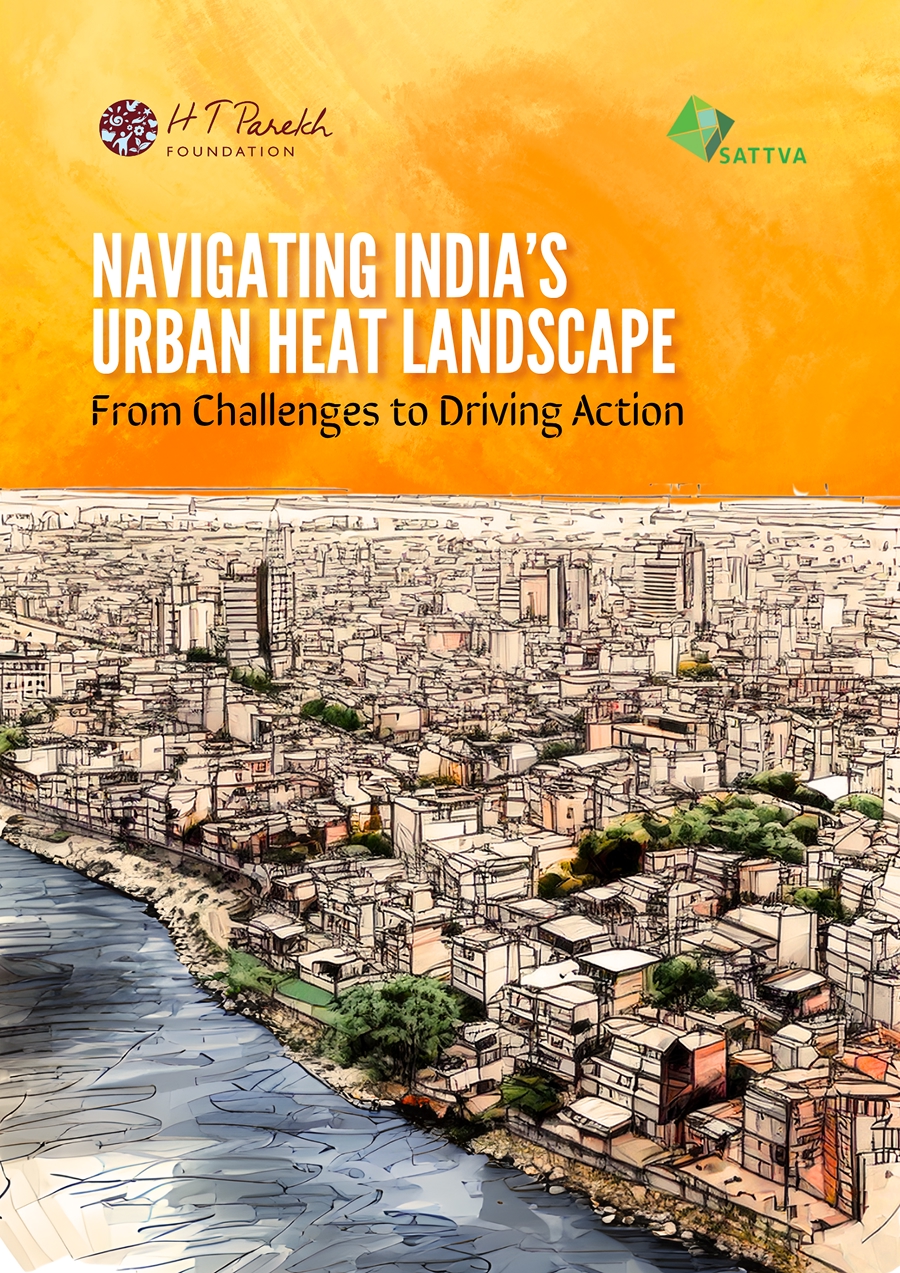
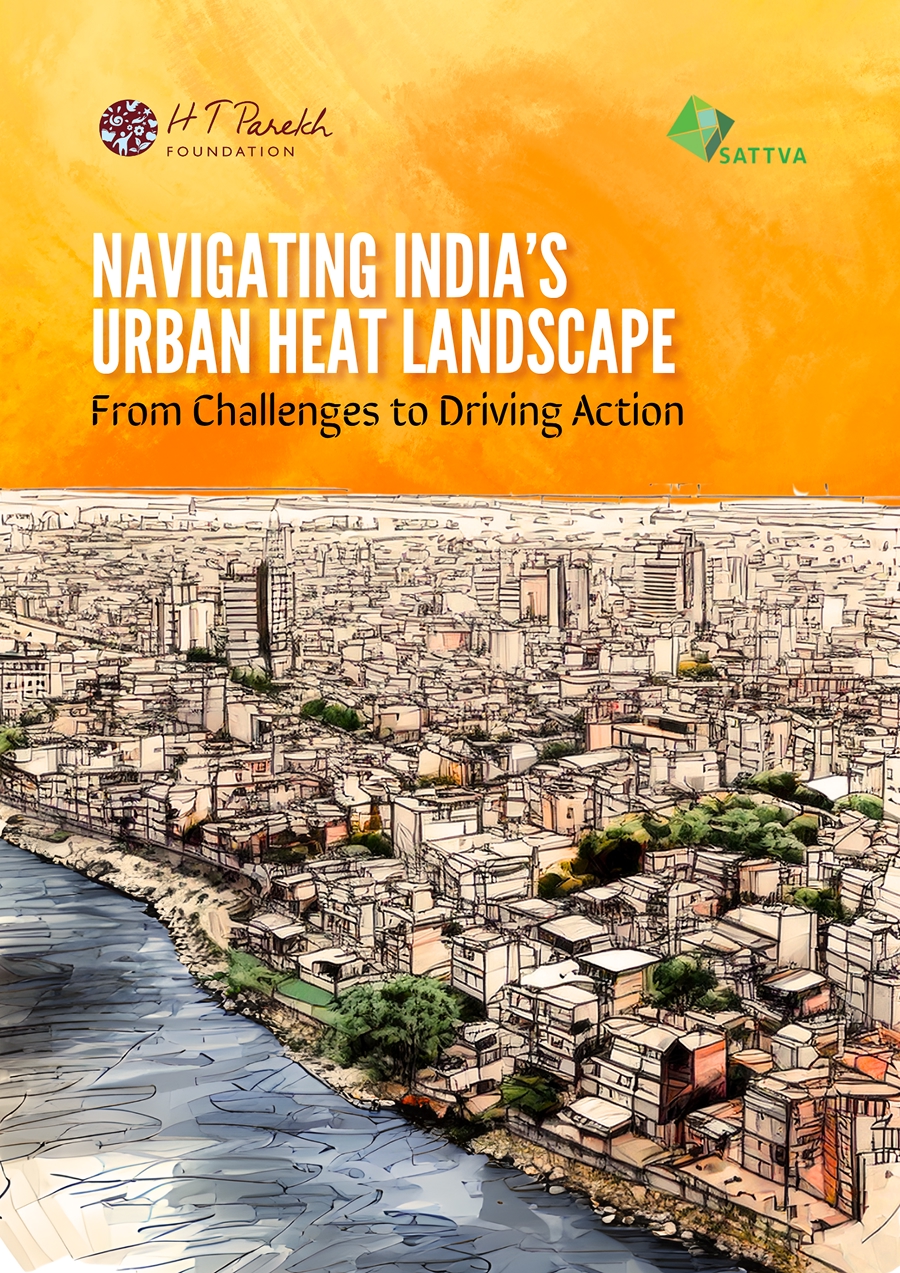
On World Environment Day 2025, the H T Parekh Foundation (HTPF) launched Navigating India’s Urban Heat Landscape: From Challenges to Driving Action, the outcome of a six-month effort to assess how extreme heat affects Indian cities. The launch webinar brought together funders, practitioners and researchers, and made the case for coordinated action on heat across health, lives, livelihoods and productivity.
The study
HTPF commissioned Sattva to carry out the Urban Heat Landscape study between October 2024 and March 2025. It examined heat stress in India, with a focus on health, livelihoods and the environment, through a policy and solutions lens. The report was developed in April–May 2025 and was HTPF’s first knowledge product on heat.
- Nine key insights that move from challenges to actionable solutions
- A solutions-first lens on India’s urban heat ecosystem
- A focus on Tier-2 and Tier-3 cities with high heat vulnerability
An emphasis on data, investment and institutional action as the levers for heat resilience
The webinar, held on 5 June 2025 at 3:00 PM IST, drew more than 120 participants: funders, implementation partners, researchers and sector experts. The session was moderated by Srikrishna Sridhar Murthy of Sattva, the study partner, and the panel brought three perspectives: funding and health, research and policy, and community and ground-level practice.
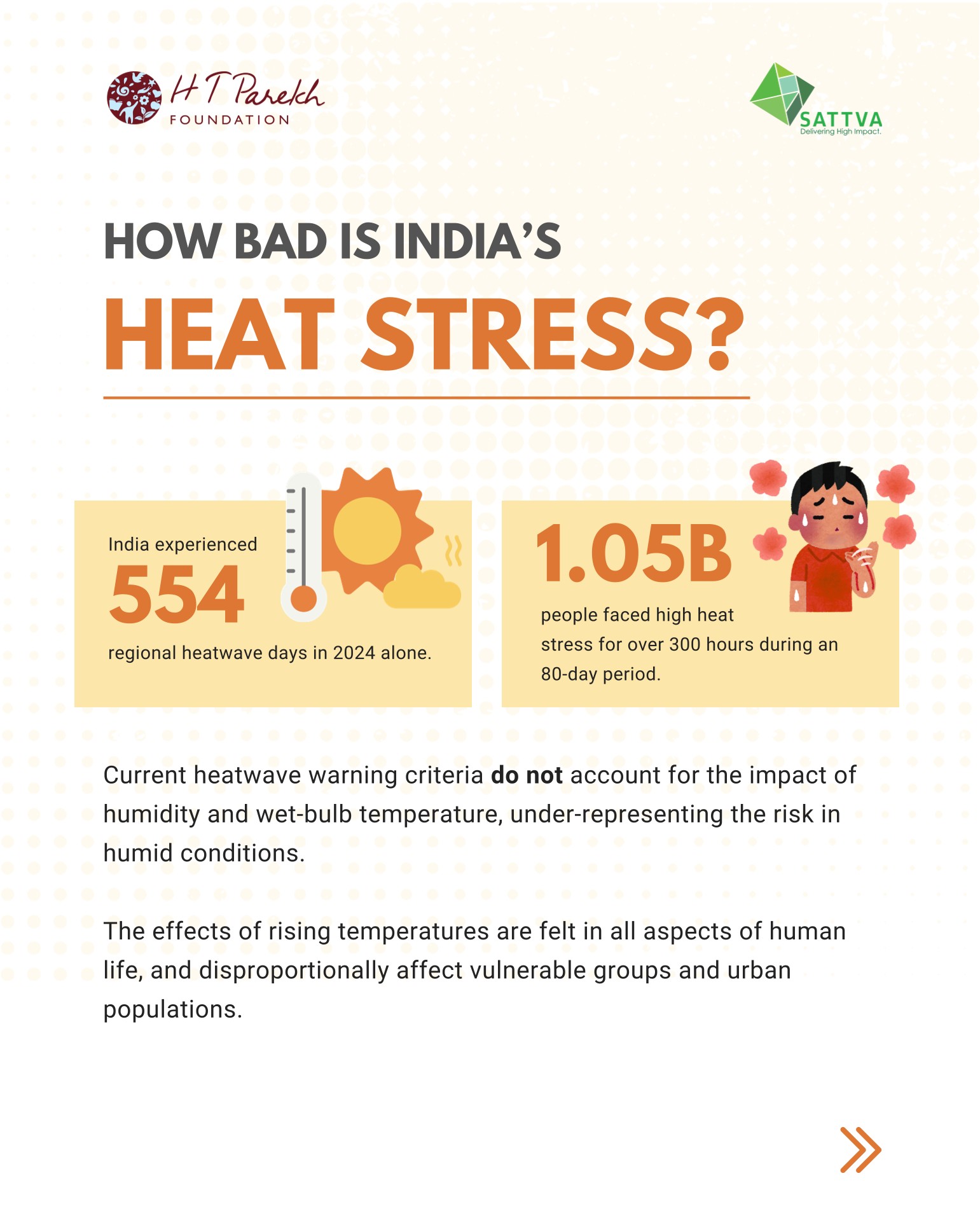
- Srikrishna Sridhar Murthy, CEO and Co-Founder, Sattva Consulting (moderator): framed heat as more than an environmental challenge, since it intersects with health and livelihoods, with 554 heatwave days recorded in India.
- Jaya Dhindaw, Executive Program Director, Sustainable Cities, and Director, WRI India Ross Center (research and policy): asked whether Heat Action Plans, the India Cooling Action Plan and Climate Action Plans are cohesive enough and called for embedding heat in city master plans backed by evidence and a clear institutional mandate.
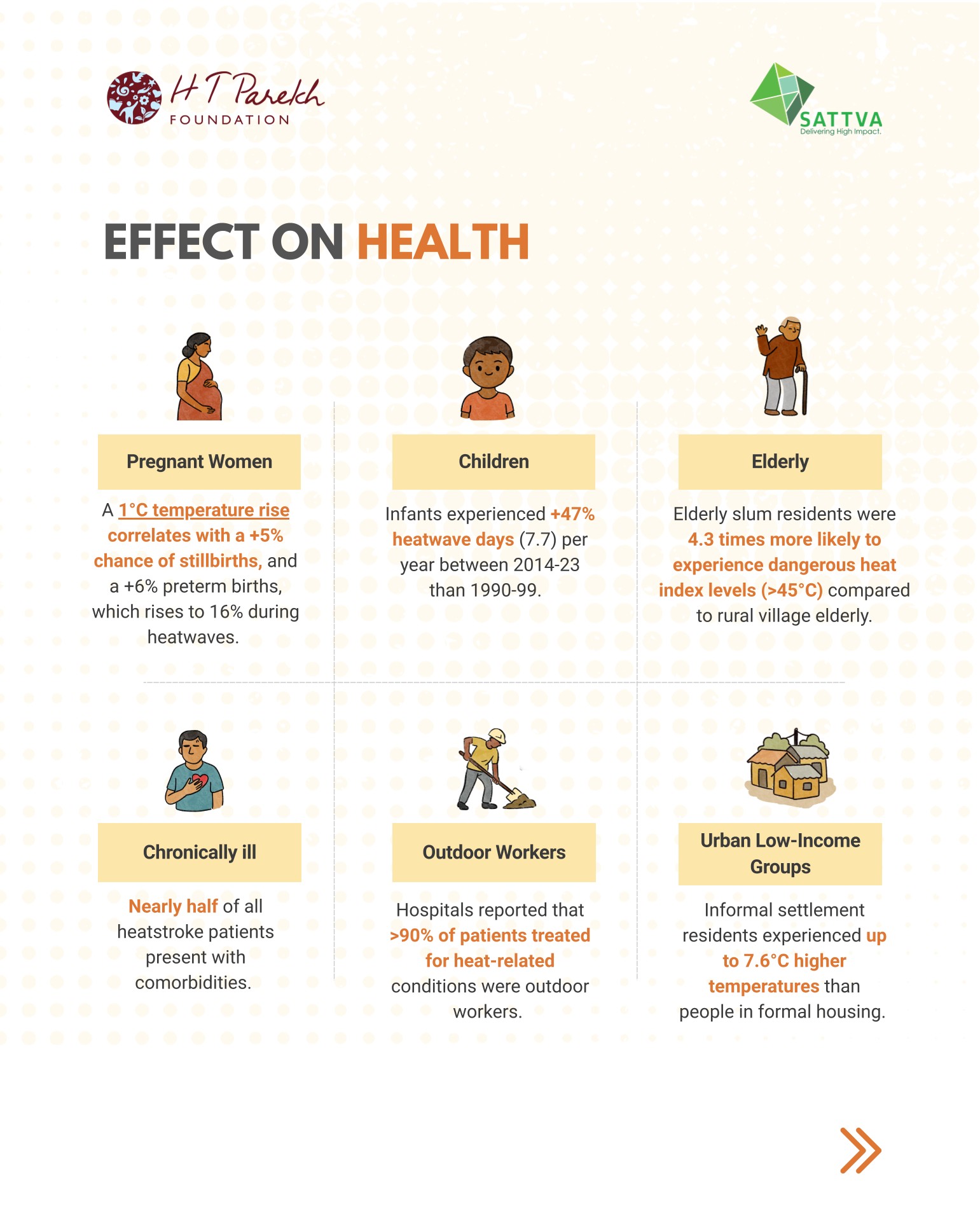
- Dr Dinesh Arora, Principal Health Specialist, Human and Social Development, Asian Development Bank (ADB) (funder and health expert): showed that heat’s health toll reaches well beyond heat stroke, yet data is thin and awareness is low, with only 32% of public health workers aware of heat exhaustion.
- Bijal Brahmbhatt, Director, Mahila Housing Trust (MHT) (community and ground perspective): described how heat cuts productivity by about a third and falls hardest on women and informal workers, and how MHT is responding with cool roofs, community heat mapping and heat-resilient vendor markets.
A common thread was the need for coherence. Cities have limited resources and are confronted with many plans, and a shared platform could help integrate them and inform action by the public and private sectors.
What the launch achieved
- Reach: the report has received more than 2,500 views online
- Positioning: it established HTPF as a funder in the urban heat ecosystem and laid the foundation for its support to heat resilience initiatives across India